Private View: Why UK Couples Are Locking Away Their Boldest Glamour Shots
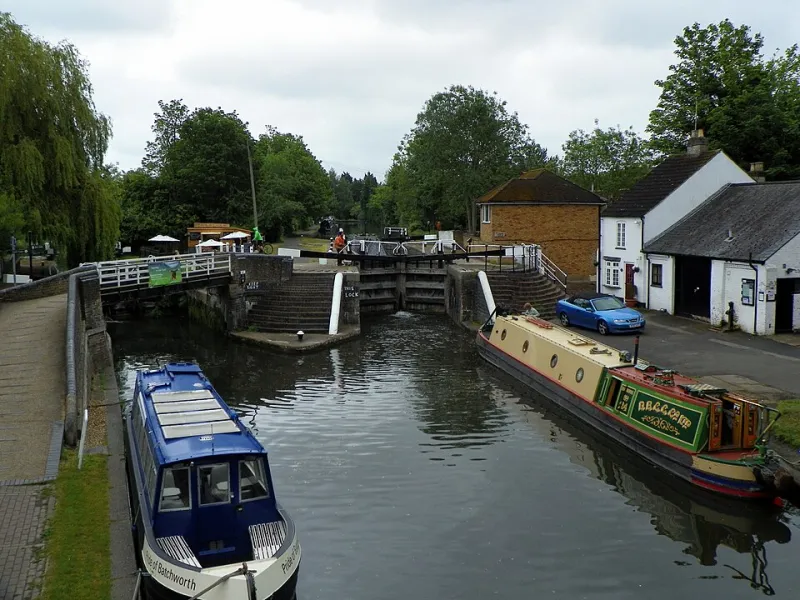
Photo: Peter O'Connor aka anemoneprojectors, CC BY-SA 2.0, via Wikimedia Commons
There is a photograph of you two. It is not on Instagram. It is not in a story highlight, not in a group chat, not in the folder your cousin made for the wedding. It lives in a locked album, a printed book or a shared folder with a name so boring it would never tempt a hacker. And somehow, that makes it more exciting.
For years, the assumed endpoint of a glamour shoot was content. You booked the studio, you got the pictures, you posted the best one and waited for the little heart to go up. In 2026, a growing number of UK couples are choosing a different ending. They are treating intimate images as private currency: something to be spent carefully, shared selectively and kept mostly for each other. This is not shame dressed up as sophistication. It is a recalibration of what feels daring.
The Feed Is No Longer the Flex
Public has been the default for so long that privacy now feels almost subversive. We have spent years being told that visibility is confidence, that posting is empowerment, that the grid is a mood board for your best self. But there is a fatigue setting in. The algorithm does not know the difference between a couple's private joke and a brand opportunity. The group chat does not always deserve the good stuff. And the auntie on Facebook definitely does not need to see the shot where your partner is biting your shoulder.
Private glamour is not anti-sexy. It is pro-intimacy. It says: this is not for the crowd. The thrill is not in the number of eyes; it is in the access. A locked album is a velvet rope with only two names on the list.
What Private Glamour Actually Looks Like
It is less dramatic than it sounds. Often it is a clothbound book in a bedside drawer. Sometimes it is an encrypted folder on a home laptop, a shared album with facial recognition switched off, a Signal thread that disappears, or a Polaroid in a shoebox. Some couples keep a private gallery with the photographer and never download the files to a phone. Others print one copy, look at it together on a rainy Sunday and put it away.
The format matters less than the agreement. The couple decides who sees what. Some include a trusted friend or a therapist in the conversation; some include nobody. The point is that the audience is chosen, not assumed. In a culture that monetises attention, choosing not to publish is a statement. It says the image is not a product. It is a relationship artefact.
The Negotiation: Who Sees What
The conversation should start before the shoot, not after the gallery lands. Try three lists: us-only, trusted circle and public-safe. Most couples find that the first list is longer than they expected. That is not a problem. It is a discovery.
Ask the uncomfortable questions early. What is the worst-case scenario if this image left the room? Who would you never want to see it? What would happen if a phone was lost, a cloud account was breached or a shared device was opened by a family member? If the answer makes your stomach drop, the image belongs in the us-only list.
Practical steps help. Use encrypted storage and a unique password. Turn off automatic cloud backups for the folder if that feels safer. Check the photographer's release form and ask how long they keep unselected frames. Under UK GDPR, you have rights around personal data, but the clearer move is to agree storage and deletion terms in writing before the shoot. If you share with a trusted circle, name the circle and set an expiry date. 'Just this weekend' is a boundary. 'Whenever' is a leak waiting to happen.
And remember: consent is not a one-off. A partner who was happy to share an image last year may not be happy now. Ask again. Do not forward. Do not screenshot. Do not assume that because someone posed for a camera, they agreed to be passed around like a meme.
Why It Feels More Daring
Posting is performative courage. Privacy is relational courage. It requires you to say to another person: I do not need the world to confirm that this is hot. I only need you. That is a different kind of confidence, and for many couples it is more electric than a thousand likes.
There is also a protective instinct at work. The UK has seen plenty of hard conversations about image-based abuse, group-chat leaks and the long afterlife of a screenshot. Keeping the best shots offline is not paranoid; it is sensible. It lets couples enjoy the fantasy without handing strangers the keys to it. The private album becomes a small act of defiance against the idea that every good thing must be broadcast.
At Nazila Love Glamour, we are not against a public display of allure. A well-chosen shot can be a wonderful thing. But the locked album has its own glamour. It is the glamour of the inside joke, the whispered compliment, the photograph that makes one of you laugh and the other go quiet. It belongs to the people in it.
The Risk of Romanticising Privacy
Privacy can curdle into secrecy if one partner wants to share and the other does not. A locked album should lock out the world, not one half of the couple. If one person is making decisions about access while the other is kept in the dark, that is not romance. That is control wearing a nice frame.
So make it a living agreement. Revisit it. If one of you wants to move an image from us-only to trusted circle, that is a new conversation, not a notification. If one of you wants to delete something, delete it without a debate about how good the lighting was. The album should feel like a shared secret, not a hostage situation.
How to Start Your Own Locked Album
- Agree the purpose: anniversary, confidence boost, private play, or simply a gorgeous record of a good day.
- Choose the format: printed book, encrypted folder, shared album or a mix.
- Name the audience. Be specific. 'Nobody' is a valid answer.
- Set a review date. Check in after a month and again after a year.
- Decide deletion rules for originals, edits and unselected frames.
- Store it safely, and keep the password somewhere that is not a group chat.
- Ask again before every share. Every time.
The best photo you take this year might never get a single like. That is not a failure. It might be the whole point. In 2026, the boldest UK couples are not the ones who post the most. They are the ones who know exactly who is allowed to look — and choose each other first.