Say It Softly: The Kitchen-Table Chat That Turns a Glamour Shoot Daydream Into a Shared Plan
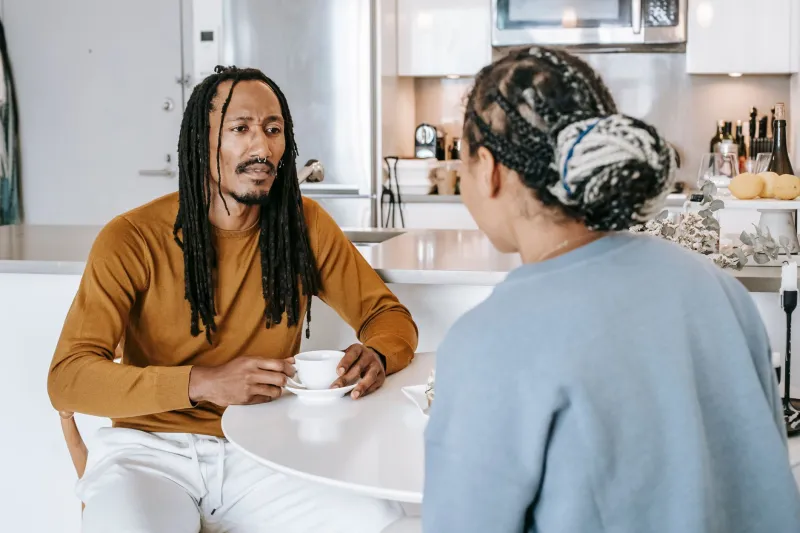
There's a particular kind of silence that follows the words: I've been thinking about us doing a glamour shoot. It's not quite the same silence as a forgotten anniversary or a suspiciously large Deliveroo order. It's the silence of a partner putting down their brew and deciding how to respond. If you're the one who wants to raise it, the goal isn't to win the argument before it starts. It's to open a door and see whether they want to walk through it with you.
Pick the Moment Like You'd Pick a Restaurant
Timing is not a small detail. A bold idea dropped at 7am on a Tuesday, while someone is hunting for a clean shirt and mentally rehearsing a commute, is a bold idea wasted. The same sentence over a lazy Saturday coffee, with phones face-down and nowhere to be, lands completely differently.
Avoid the obvious traps: not after a row, not during a stressful week, not when one of you has had three pints and is feeling brave. Choose a moment when you're both fed, reasonably rested, and not already negotiating something else. The kitchen table is underrated. It's neutral territory. Nobody has to make eye contact for the entire conversation, and there's usually a biscuit within reach.
And be honest about what you're doing. Can we have a proper chat about something? Nothing's wrong. That sentence alone prevents about eighty per cent of the panic.
Lead With Curiosity, Not a Booking Form
There's a difference between I want us to do a glamour shoot and I've been curious about whether a glamour shoot might be something we'd enjoy together. The first sounds like a decision already made. The second invites your partner into the conversation rather than presenting them with a fait accompli.
Try something like: I saw some really tasteful couples' glamour work recently and it got me thinking. I'm not saying we should book anything — I genuinely don't know if it's us — but I'd love to hear what you think.
That gives them room to say no without feeling like they're rejecting you. It also gives them room to say yes without feeling pressured into enthusiasm they don't yet feel. Consent-aware doesn't just mean asking before you touch. It means asking before you plan, too.
The Scripts That Actually Work
Most people don't need a full script. They need a few sentences to borrow when their brain goes blank. Here are three openers that tend to land well.
The low-stakes opener: I've got a slightly random idea and I'm genuinely fine if you hate it. I've been wondering whether a glamour shoot might be fun for us — something for us, not for anyone else. What's your gut reaction?
The reassurance-first opener: Before I say this, I want you to know I'm not unhappy with anything. I just think you look incredible and I'd love to capture that somehow. Would a shoot be something you'd ever consider, or is it a hard no?
The curiosity opener: I've been reading about couples who do boudoir-style shoots and I'm curious. Not booked, not planned — just curious. What comes up for you when you hear that?
Notice what none of these do: they don't promise a specific outcome, they don't imply the other person is being boring for hesitating, and they don't turn a no into a negotiation. A no is useful information. Treat it like one.
When Nerves Show Up as Jealousy
Sometimes the hesitation isn't about the shoot itself. It's about the photographer. It's about who sees the images. It's about whether the whole thing is a cover for something else. Those fears are normal, and they deserve a proper answer rather than a dismissive don't be silly.
If your partner says they'd feel weird about a stranger directing them into poses, that's not an obstacle to bulldoze. It's a design flaw in the plan. There are UK photographers who specialise in couples' work, who send mood boards in advance, who let you bring a friend or a partner into the room, and who are explicit about image rights and privacy. Some couples shoot at home with a remote shutter and a tripod and never involve anyone else at all. If the nerves are about exposure — literal or emotional — the fix is usually more control, not more persuasion.
If the nerves are about jealousy, name it without making it a character flaw. I hear that. What would make you feel more comfortable — being there the whole time, choosing the photographer together, or keeping the pictures completely private? Jealousy often softens when it's treated as a signal rather than an accusation.
Shared Fantasy or Real Plan? The Tell
Not every sexy idea needs to become a diary entry. Some things are better as a shared daydream — a thing you talk about in bed or over a second glass of wine, knowing full well you'll never actually ring a photographer. That's not a failure. That's a healthy fantasy life.
So how do you know which one you're in? Look for specifics. A shared fantasy tends to stay vague and delicious: imagine if we did... A real plan starts producing logistics. Who would we ask? What would we wear? Where would we put the pictures? Would we tell anyone? If the conversation keeps circling back to practical questions, you're probably moving towards something bookable. If it keeps returning to the thrill of the idea, enjoy it for what it is.
There's no prize for pushing a fantasy into a plan before it's ready. The best couples' shoots tend to come from couples who talked about it for months, not hours, and who both felt they could pull the plug at any point without it becoming A Thing.
The Follow-Up That Keeps It Safe
Whatever happens at the kitchen table, close the conversation properly. If they're interested, don't immediately start researching studios at midnight. Say you'll look into a few options together and that nothing gets booked without a proper yes from both of you. If they're not interested, believe them the first time and let it rest. You can always revisit it in six months; you can't un-ring the bell of making someone feel nagged.
And if you're the one who was asked? You're allowed to be curious without committing, nervous without being a killjoy, and enthusiastic without signing anything. The first conversation isn't the shoot. It's just the two of you working out whether the door is worth opening. Take it slowly. Put the kettle on. There's no rush.