One Poses, One Passes: A UK Couple's Guide to Camera Confidence Clashes
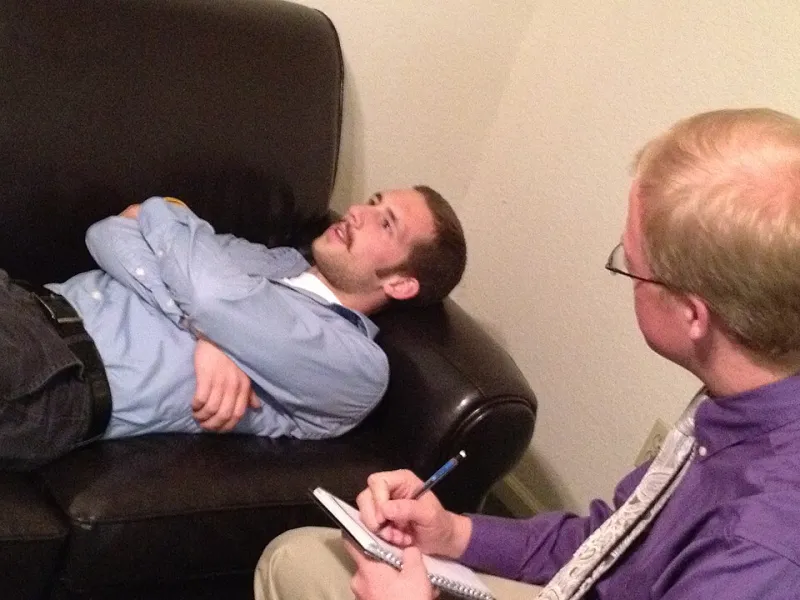
Photo: Jty33, CC BY-SA 3.0, via Wikimedia Commons
Picture the scene: a rainy Saturday in a Manchester flat, a ring light in the corner, and a couple who have agreed to try a glamour shoot at home. One of them is already testing angles in the mirror. The other is making tea with the focused avoidance of someone who would rather re-grout the bathroom. Nothing dramatic has happened. Nobody has said the wrong thing. Yet. This is the glamour gap, and it is far more common than the glossy feeds suggest.
At Nazila Love Glamour, we talk to couples who are broadly happy but quietly stuck on this point. One partner feels bold, playful and camera-ready. The other feels exposed, awkward or simply uninterested. The mistake is treating that difference as a verdict on the relationship, or as a problem to be argued away. It is neither. It is a mismatch of comfort levels, and mismatches need negotiation, not victory.
The gap is not a verdict
British reserve gets a bad rap, but it exists for a reason. Many of us were raised not to make a fuss, not to show off and certainly not to pose in lingerie while someone adjusts a softbox. So when one partner discovers a love of glamour photography, the other may feel a low-level alarm: What does this mean? Am I being asked to join in? Will I be judged for saying no?
Start by separating the person from the pose. A partner who loves the lens is not automatically asking the other to perform. They may simply enjoy the creative buzz, the dressing-up, the confidence boost. A partner who avoids the camera is not automatically ashamed of their body or disapproving of their other half. They may just prefer to stay behind it. Both positions are allowed.
Talk about the why, not the wardrobe
Before debating outfits, locations or whether the bedroom wallpaper is too busy, ask what the shoot is for. Is it a private confidence ritual? A playful date-night experiment? A professional portfolio? A gift for a partner? The answer changes everything.
If the camera-confident partner wants to feel desired, say so. If the camera-cautious partner worries about being pressured into sharing images, say that too. Use plain language and avoid scoring points. 'I would love to try this, and I need to know you are not secretly dreading it' lands better than 'You never support anything I want to do.' The first invites a conversation; the second invites a row.
Jealousy is information, not a prosecution
Let us be honest: jealousy can creep in. One partner may feel unsettled by the idea of their other half posing for someone else, even a professional photographer with a clipboard and a queue of clients. Another may feel left out when the glamour side of their partner's life gets attention online.
Treat jealousy as information rather than an accusation. It usually points to a need: reassurance, inclusion, clearer boundaries or simply a proper conversation. Ask what would help. Sometimes it is as simple as agreeing that certain images stay private. Sometimes it is about meeting the photographer, seeing the mood board or being on set for the first shoot. Sometimes it is about hearing, clearly and repeatedly, that the lens is not a rival.
Private, shared, or never seen: map the image journey
Consent does not stop at the shutter. UK couples need to talk about where images go after the shoot: a locked folder, a shared album, a print in a drawer, a creator's portfolio, a social feed. Each step is a separate decision. What feels fine on a Sunday afternoon may feel different on a Tuesday morning when a work colleague appears in the same group chat.
Agree the default before anyone poses. Private means private: no cloud album, no casual sharing, no 'just showing my mate'. Shared means both people know exactly who sees what and why. If one partner wants to post, the other gets a genuine veto, not a guilt trip. And if either person changes their mind later, the conversation reopens. That is not drama; that is consent doing its job.
Compromise that does not feel like a loss
The middle ground is often more creative than couples expect. The camera-cautious partner might be happy to direct rather than pose, choose the playlist, hold the reflector or make tea. The camera-confident partner might agree to no face, softer lighting, a closed set or a private shoot with no sharing at all. Some couples try a 'test roll' on a phone, just to see how it feels, with an explicit rule that nothing leaves the room.
A date-night conversation can help. Book a night that is not a shoot: a curry, a walk, a pint in a quiet pub. Talk about the glamour gap when nobody is holding a camera. Ask three questions: What would make you feel safe? What would make you feel excited? What would make you feel pressured? Then listen without fixing.
When to pause or call it
If one partner is being pushed, mocked, guilt-tripped or told they are boring for saying no, the shoot is not ready. If images are being taken or shared without agreement, that is a red flag, full stop. A glamour shoot should add spark, not remove trust.
The glamour gap does not have to close completely. Some couples will always be one-in-front-of-the-lens and one-behind-it. That can work beautifully, as long as both people feel respected. The goal is not to turn a reluctant partner into a willing model. The goal is to make sure the camera never comes between you.